Cataplex B12 Review by Dr. Bell
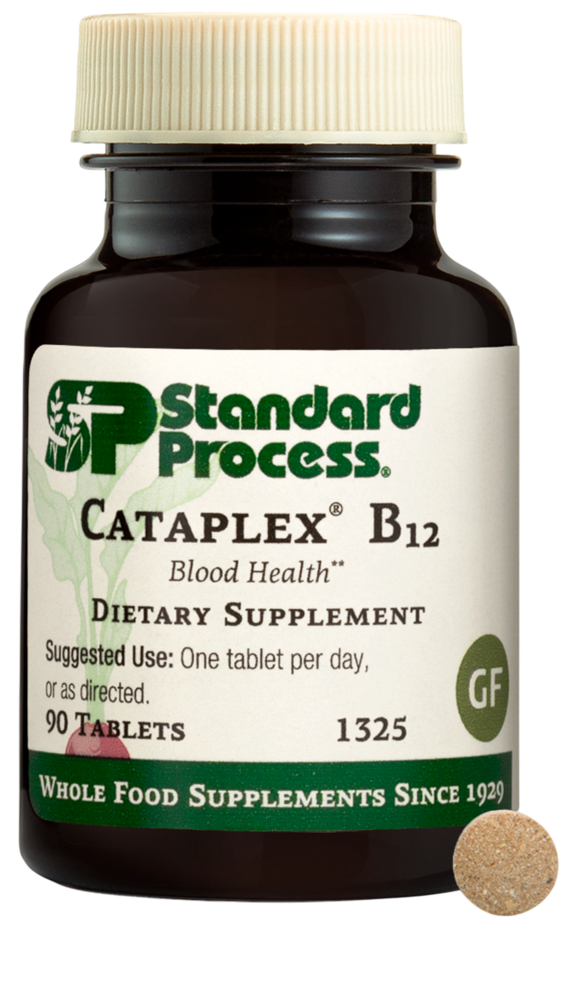
Cataplex B12 by Standard Process is a whole-food B12 supplement. Learn what's in it, who needs it, and what the research says.

Introduction and Benefits
If you have ever felt tired for no clear reason, or noticed your thinking felt a little foggy, low B12 might be part of the picture. Vitamin B12 is one of those nutrients your body truly cannot do without. It helps your nerves work properly, supports healthy red blood cells, and plays a big role in how your brain functions day to day.
Cataplex B12 is made by Standard Process, a company that has been making whole-food supplements since 1929. What makes this product stand out is that it is not just a straight dose of synthetic B12. It is designed around the idea that nutrients work better when they come packaged the way nature intended, alongside the other compounds that help your body recognize and use them.
Here are some of the main reasons people reach for Cataplex B12:
- Supporting healthy energy levels. B12 plays a key role in how your body turns food into energy. When levels are low, fatigue is often one of the first signs.
- Nerve health. Your nervous system depends on B12 to keep the protective coating around nerves (called myelin) in good shape.
- Brain and mood support. B12 helps your body make chemicals in the brain that affect how you feel and think.
- Healthy red blood cells. Without enough B12, red blood cells can grow too large and not work the way they should. This is called megaloblastic anemia.
- Heart health. B12 helps manage homocysteine, an amino acid that, at high levels, has been linked to heart problems.
This is not a high-dose, mega-supplement. It is designed to work with your body in a gentler, more food-based way.
Optimize Your Health Today
Don't overpay for questionable quality. Get guaranteed authentic products directly from Dr. Bell's dispensary for less than Amazon, plus enjoy free shipping and returns.
Key Ingredients
Cataplex B12 contains a handful of ingredients that work together. Let me break them down in plain terms.
Vitamin B12 (as Cobalamin)
This is the star of the show. Cobalamin is the form of B12 found in this product. Your body needs B12 but cannot make it on its own, so you have to get it from food or supplements. B12 is found mainly in animal products like meat, fish, eggs, and dairy, which is why people who eat little or no animal food are often at risk for low B12.
Bovine Liver
Standard Process uses dried bovine (beef) liver as a whole-food source of nutrients. Liver is one of the richest natural sources of B12 on the planet. It also brings along other B vitamins, iron, and natural proteins that support the body. This whole-food base is part of what makes Cataplex B12 different from a typical synthetic supplement.
Nutritional Yeast
Nutritional yeast is a good natural source of B vitamins. It adds to the food-based profile of this supplement and helps round out the B vitamin family.
Bovine Spleen
The spleen is part of the immune system. Standard Process has used glandular materials for decades because they believe the body recognizes and uses nutrients from similar animal tissues more easily. While this idea is debated in mainstream science, it has a long history of use in traditional and whole-food-based nutrition.
Other Supportive Nutrients
The formula also includes small amounts of other B-complex vitamins. B12 does not work alone in the body. It works closely with folate (B9) and B6, especially when it comes to managing homocysteine and supporting nerve health. Having these other B vitamins present helps the whole process run more smoothly.
Who It Is Best For
Cataplex B12 is a good fit for a specific group of people. Here is who tends to benefit most:
Vegetarians and vegans. Since B12 is found almost entirely in animal foods, people who avoid those foods are at the highest risk of running low.
Adults over 50. As you age, your stomach makes less of a substance called intrinsic factor, which your body needs to absorb B12 from food. This makes supplementing more important as you get older.
People with low energy or brain fog. If you have ruled out other causes, low B12 is worth looking into with your doctor.
Those with digestive issues. Conditions like Crohn's disease, celiac disease, or low stomach acid can all interfere with how well your body absorbs B12 from food.
People taking certain medications. Metformin (for blood sugar) and proton pump inhibitors (for acid reflux) are two common medications known to reduce B12 absorption over time.
If any of these apply to you, it is worth having a conversation with Dr. Bell or another qualified practitioner before starting any new supplement.
Frequently Asked Questions
Is Cataplex B12 the same as a regular B12 supplement? Not exactly. Most B12 supplements use synthetic forms like cyanocobalamin. Cataplex B12 uses whole-food ingredients like liver and nutritional yeast alongside cobalamin, with the goal of giving your body a more natural package of nutrients.
How do I know if I am low in B12? A simple blood test can check your B12 levels. Common signs of low B12 include fatigue, tingling in the hands or feet, memory trouble, and mood changes. But a blood test is the only way to know for sure.
Can I take this with other supplements? In most cases, yes. B12 is a water-soluble vitamin, meaning your body flushes out what it does not need. That said, always check with your health practitioner before mixing supplements, especially if you take medications.
How long before I notice a difference? This varies from person to person. Some people feel a difference in energy within a few weeks. For others, especially those who are significantly low, it can take longer. Consistency matters here.
Is this safe for long-term use? B12 is considered very safe. There is no established upper limit for B12 because toxicity from this vitamin is extremely rare. For personalized guidance, check with Dr. Bell.
Scientific Research
The research behind B12 is solid and well-established. Here are a few areas worth knowing about:
B12 and cognitive health. A study published through the National Institutes of Health found that low B12 levels are linked to faster cognitive decline in older adults. You can read more at PubMed.
B12 and nerve function. Research confirms that B12 is essential for maintaining myelin, the protective coating around nerve fibers. Deficiency can lead to nerve damage over time. A helpful overview is available at NIH Office of Dietary Supplements.
B12 and homocysteine. Several studies show that B12, along with B6 and folate, helps lower homocysteine levels in the blood. High homocysteine has been tied to a greater risk of heart disease and stroke. One such study can be found at PubMed.
B12 absorption and age. Research shows that older adults absorb B12 from food much less efficiently than younger people. This supports the use of supplements, especially in those over 50. More on this from NIH.
The research does not make wild claims. It simply shows that B12 is a foundational nutrient that many people are not getting enough of, and that keeping levels healthy matters for your brain, nerves, heart, and energy.
If you think Cataplex B12 might be a good fit for you, reach out to Dr. Bell's office. Getting your levels tested first is always the smart starting point.

About the Author: Dr. Bell
Dr. Bell is a leading expert at Dr. Bell Health. As a holistic health practitioner and chiropractor with a deep passion for evidence-based supplementation, Dr. Bell provides trustworthy, science-backed insights to help you achieve your optimal health.