Echinacea-C™ Review by Dr. Bell
Echinacea-C from Standard Process pairs whole echinacea root with food-based vitamin C for steady seasonal immune support. Dr. Bell's plain-English review.

Introduction and Benefits
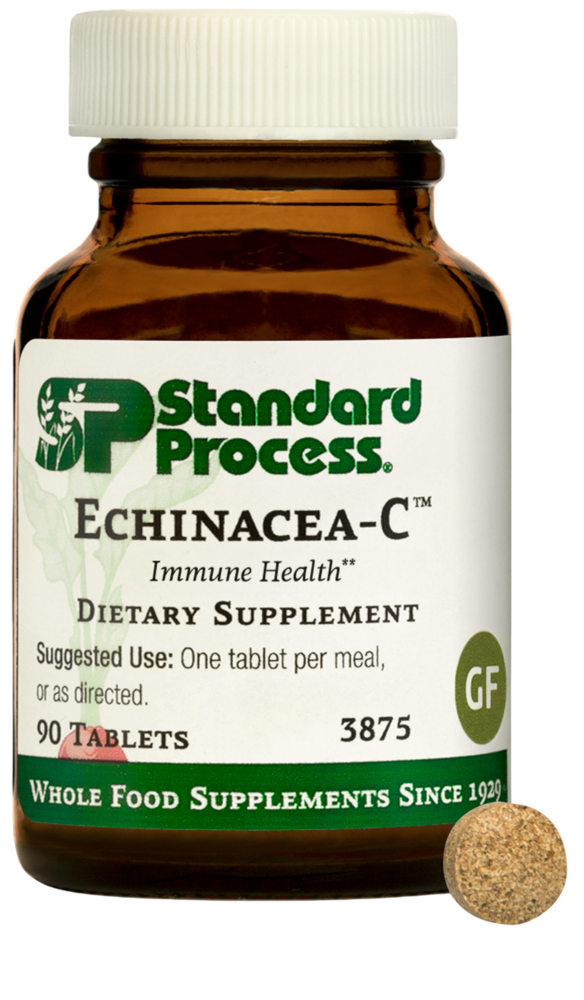
Echinacea-C is a small, focused product in the Standard Process catalog. It pairs two old standbys that work well together: whole echinacea root and a food-based source of vitamin C. The idea is simple. When the immune system is leaning into a busy season, it needs both plant input and steady daily vitamin C. This product carries both in one tablet.
Echinacea is a flowering plant native to North America. People in the upper Midwest and Great Plains have used it for hundreds of years for early-season sniffles, sore throats, and the run-down feeling that shows up after a stressful week. Modern research has been mixed on which exact compounds do the work, but the plain reading of the data is steady. Whole echinacea, taken at the first sign of trouble, often shortens the rough patch.
Vitamin C is the other half of the picture. The body cannot make it. It has to come in daily through food. The white blood cells (the cells that handle the daily clean-up work for the immune system) lean on vitamin C heavily. When daily vitamin C runs short, those cells slow down. Standard Process uses a food-based vitamin C source rather than synthetic ascorbic acid alone. The food matrix carries the natural cofactors that go with vitamin C in fruit (the bioflavonoids and trace plant compounds that help the body use it).
Patients reach for Echinacea-C at the first sign of a cold, after travel, before a stressful work week, or during the change of seasons in the fall and spring. It is also a sensible daily pick for people who run low on fresh fruit and vegetables in the winter months.
The Easy Way to Get the Real Thing
Patients ask me where to buy supplements they can trust, and the answer is always the same. My Fullscript store gives you practitioner pricing, free shipping, and a guarantee the bottle came straight from the maker.
Open My Fullscript Store →Key Ingredients
Echinacea-C keeps the ingredient list short on purpose.
Echinacea purpurea root. A whole root extract from the most-studied species in the echinacea family. The whole root carries the natural mix of plant compounds that work together, rather than a single isolated extract.
Echinacea angustifolia root. A second species in the same family, with a slightly different mix of plant compounds. Using both species is a common practice that goes back to the original early-1900s herbal preparations.
Acerola cherry. A small red fruit native to Central and South America. It is one of the highest natural sources of vitamin C in the plant world. Standard Process uses it as the food base for the vitamin C in this product.
Buckwheat (whole plant). Carries rutin, a plant compound from the bioflavonoid family. Bioflavonoids work alongside vitamin C in the body and help it last longer.
Calcium lactate. A gentle calcium form the body uses in steady muscle and nerve work. It also helps stabilize the tablet.
A small base blend. Honey and a few inactive ingredients round out the tablet.
The usual dose during a busy seasonal stretch is two tablets, three to six times a day, with water. For daily winter upkeep, one or two tablets twice a day is a steady starting point. Most patients step down once the season eases.
Who it is best for
Echinacea-C fits a few specific homes in a daily plan.
Adults at the first sign of a cold. A scratchy throat, a runny nose, or a heavy head. The classic use of echinacea is to step in early and step in often during the first 48 to 72 hours.
People who travel often. Long flights, hotel rooms, and time-zone changes all wear the immune system down. A bottle of Echinacea-C in a carry-on is a sensible piece of travel gear.
Adults who run low on fresh fruit in the winter. A daily food-based vitamin C is a reasonable backstop for the months when fresh produce is harder to come by.
Parents during the school-year sniffle season. When the kids bring home every bug from the classroom, a daily round of Echinacea-C helps the parent stay upright through the season.
People recovering from a recent cold. The two weeks after a bad cold are when the immune system is still cleaning up. A steady daily dose during that window helps the recovery feel cleaner.
It is not the right product for everyone. People with autoimmune conditions (like rheumatoid arthritis or lupus) should check with their prescribing doctor before using echinacea. The plant has a mild stimulating effect on the immune system, and that may not fit every plan. People with a clear ragweed or daisy allergy should pass. Echinacea is in the same plant family.
Frequently Asked Questions
Should I take it daily or only when I feel sick? Both uses are common. A small daily dose through the cold-season months is reasonable upkeep. A larger dose at the first sign of a cold (two tablets, three to six times a day, for two to three days) is the classic short-burst use.
How long until I notice anything? At the first sign of a cold, most patients feel a difference within a day or two. The cold often runs shorter and milder. For daily winter upkeep, the picture is steadier and quieter, and the goal is fewer rough stretches over the season as a whole.
Can I take it with my other supplements? Yes, in most cases. Echinacea-C pairs well with the daily basics. People on prescription immune-modifying medicines (the kind used for autoimmune disease) should check with their prescribing doctor first.
Is it safe for children? Children over four can use a smaller dose, often half the adult dose, with water. Talk to your child's doctor first if there are other health concerns in the picture.
Why is the vitamin C dose lower than what I see in other supplements? Standard Process uses food-based vitamin C from acerola cherry, not synthetic ascorbic acid in megadoses. The food form is steadier and easier on the stomach, and the dose is meant to be taken several times a day.
Scientific Research
A few plain links to look at.
A NIH fact sheet on echinacea, with a plain summary of what the research shows. https://www.nccih.nih.gov/health/echinacea
A PubMed review of echinacea for the common cold. https://pubmed.ncbi.nlm.nih.gov/24554461/
A NIH fact sheet on vitamin C, including its role in immune function. https://ods.od.nih.gov/factsheets/VitaminC-HealthProfessional/
A PubMed summary on bioflavonoids and how they work alongside vitamin C in the body. https://pubmed.ncbi.nlm.nih.gov/27187333/
If you and your provider feel Echinacea-C fits your plan, keep a bottle close at the change of seasons and during travel. Pair it with the basics that always pay off: real food, water, sleep, a daily walk, and washing your hands. Echinacea-C is not a cold cure. Nothing is. But a steady daily dose during the rough months, paired with a larger short-burst dose at the first sign of trouble, is one of the oldest and most reasonable plant-and-food strategies in the cabinet.

About the Author: Dr. Bell
Dr. Bell is a leading expert at Dr. Bell Health. As a holistic health practitioner and chiropractor with a deep passion for evidence-based supplementation, Dr. Bell provides trustworthy, science-backed insights to help you achieve your optimal health.