Emphaplex Review by Dr. Bell
Emphaplex from Standard Process supports steady lung tissue health with whole food nutrients and tissue extracts. Dr. Bell's plain-English review.

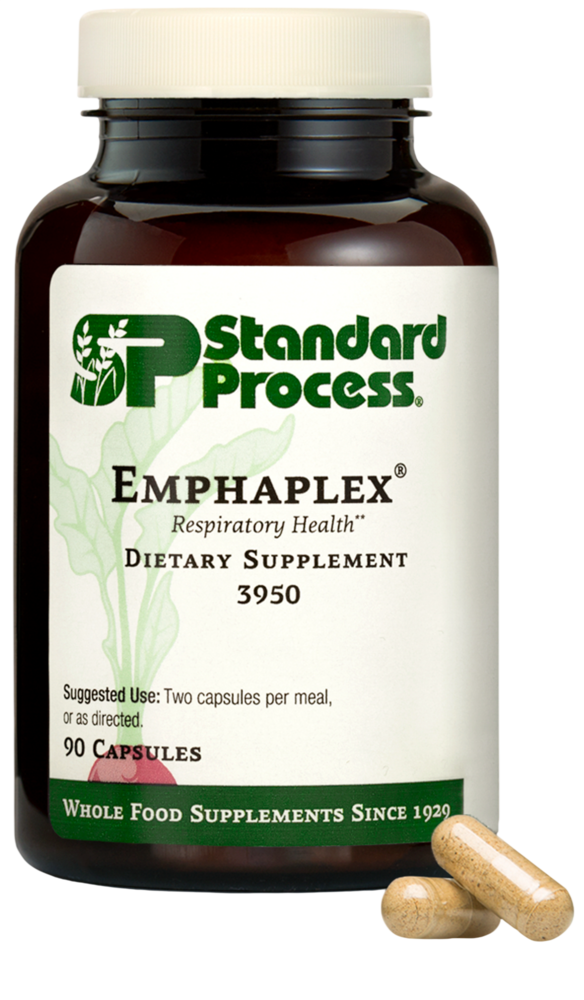
Introduction and Benefits
Emphaplex is one of the older, quieter products in the Standard Process catalog. It is built around the daily upkeep of the lung tissue and the surrounding airways. Dr. Royal Lee designed the product back in the 1940s for patients with long-term lung wear, especially the kind that came from smoking, dusty work, or years of poor air quality. The picture has not changed much. People still need lung support, and the basic ingredient strategy still fits.
The lungs are two large, soft, sponge-like organs that handle the daily exchange of oxygen and carbon dioxide. They are also one of the most exposed organs in the body. Every breath carries air, dust, smoke, pollen, and small particles into the deepest folds of the tissue. The body has its own daily clean-up system for all of this, but when the load is heavy for years, the small daily nutrients and tissue inputs the system needs can run thin.
Emphaplex is meant to refill that gap. It is not a respiratory medicine. It does not replace one. It is a daily food and tissue blend that supports the steady upkeep of the lung tissue and the small daily processes that keep the airways clear.
Patients reach for Emphaplex during long stretches of dry indoor air (the winter months for most of the country), after a heavy cold or a stretch of bronchitis, during a season of high allergens, or as part of a long-term plan for someone who used to smoke and wants to support the lung tissue going forward.
One Login, Every Supplement
My Fullscript store keeps every supplement I review in one place. One account, one cart, free shipping, and easy refills you can set up once and forget about.
Browse My Full Catalog →Key Ingredients
Emphaplex blends whole food, plant, and tissue support.
Bovine lung extract. A small amount of bovine lung tissue. The natural protein input gives the body's own lung tissue raw building blocks for steady upkeep.
Bovine adrenal cytotrophin extract. Supports steady adrenal balance, which is closely tied to airway tone and the body's daily response to small irritants.
Defatted wheat germ. A whole food source of the vitamin E family, which the body uses to protect lung cell membranes from daily wear.
Carrot (whole root). A whole food source of beta-carotene, which the body converts into vitamin A. Vitamin A is one of the key nutrients for steady upkeep of the lining of the airways.
Bovine spleen. Adds natural protein input that supports the immune-related work the lungs do every day.
Calcium lactate and magnesium citrate. Gentle minerals the body uses in steady muscle work, including the small daily work of the airways.
A small base blend. Honey and a few inactive ingredients round out the tablet.
The usual dose is two tablets, three times a day, with meals, during a busy seasonal stretch or a recovery period. Many patients step down to one tablet three times a day for steady long-term upkeep after the first one to three months.
Who it is best for
Emphaplex fits a few specific homes in a daily plan.
Adults recovering from a heavy cold or a stretch of bronchitis. The four to eight weeks after a bad respiratory illness are when the lung tissue is still cleaning up. Emphaplex is a sensible daily helper during that window.
People who used to smoke and want to support lung tissue going forward. The lungs do a lot of slow recovery work after the last cigarette, and that work goes on for years. A daily food and tissue blend fits well in a long-term plan.
Adults with long-term exposure to dusty or smoky air. Construction, farming, firefighting, and any job that puts steady particle load on the lungs. The daily wear builds up over years, and the small daily nutrient inputs that support recovery add up too.
People with a history of seasonal allergies that hit the chest hard. The airway lining takes a beating during a heavy allergy season. Emphaplex pairs well with whatever the rest of the seasonal plan looks like.
Older adults who notice they get winded more easily than they used to. Daily upkeep of the lung tissue is a slow project. Emphaplex is one of several products that fits in that long-term plan, alongside steady gentle movement.
It is not the right product for everyone. People with a clear bovine protein allergy should pass. People with celiac disease or a clear wheat allergy should pass. The defatted wheat germ may not fit. People with serious lung disease (like COPD or asthma) should work closely with their prescribing doctor on the full plan; Emphaplex is daily nutrient support, not a treatment.
Frequently Asked Questions
Is this a treatment for emphysema? No. Emphaplex is not a treatment for emphysema, COPD, asthma, or any other lung disease. It is a daily food and tissue support blend that fits into the bigger picture of lung tissue upkeep. People with serious lung disease should work with their prescribing doctor on the full plan.
Will it help me breathe better right away? Most patients do not notice a quick shift. The work of the lung tissue is slow. Most patients give it eight to twelve weeks before judging it. The shifts are quiet. A little easier recovery after a cold, a little less rattle in the chest at the change of seasons, a little easier breath on a long walk.
Can I take it long term? Yes, for most adults, in the doses on the label. Many patients step down to a smaller daily dose after the first three months and stay on it for steady upkeep.
Does it help with allergies? Indirectly. Emphaplex supports the lining of the airways, and a steadier lining handles small irritants better. It is not an allergy medicine, and it does not replace one.
Can I take it with my asthma inhaler? In most cases, yes, but check with your prescribing doctor first. The two should be coordinated, not stacked without a plan.
Scientific Research
A few plain links to look at.
A NIH overview of the lungs and how they handle the daily exchange of oxygen and carbon dioxide. https://www.nhlbi.nih.gov/health/lungs
A PubMed review on vitamin A and the steady upkeep of the lining of the airways. https://pubmed.ncbi.nlm.nih.gov/26861380/
A NIH fact sheet on vitamin E, which the body uses to protect cell membranes from daily wear. https://ods.od.nih.gov/factsheets/VitaminE-HealthProfessional/
A PubMed summary on the slow recovery of lung tissue after long-term exposure to smoke and dust. https://pubmed.ncbi.nlm.nih.gov/28859805/
If you and your provider feel Emphaplex fits your plan, give it the time it needs. Take it daily for at least eight to twelve weeks before judging it. Pair it with the basics that always pay off: real meals on a steady schedule, water, sleep, a daily walk in fresh air, and steady gentle movement. Emphaplex is a quiet, slow product. It does not push the lungs. It feeds them. Used that way, it earns its place in long-term plans for people who want to give the lung tissue the daily support it needs.

About the Author: Dr. Bell
Dr. Bell is a leading expert at Dr. Bell Health. As a holistic health practitioner and chiropractor with a deep passion for evidence-based supplementation, Dr. Bell provides trustworthy, science-backed insights to help you achieve your optimal health.